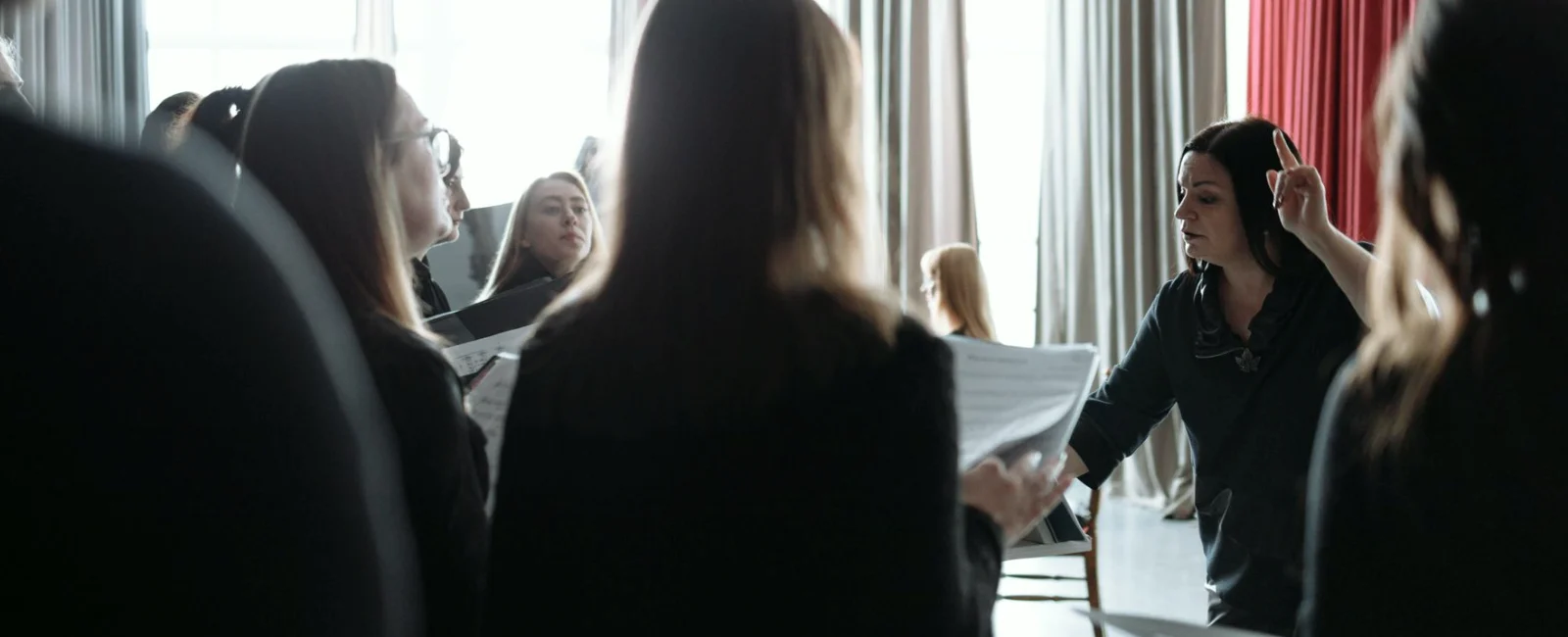
Every module begins with a short explanation of the task and why it matters. Marcus, Priya or Jenna then demonstrates it on a sample event, narrating the choices as they go. You see the cue sheet being written, the camera being placed or the rehearsal being shaped, rather than only hearing about it.
Next comes guided practice. You carry out the same task on your own sample project while an instructor moves between learners, asking questions and pointing out what could go wrong on the day. The aim is to build judgement, not memorise a template.
Practice scripts and sample briefs keep the exercises realistic. A presenter has a script with awkward transitions, a venue has limited power, a brief leaves out the audience size. These small difficulties are chosen on purpose, because real events rarely arrive tidy.
Feedback is specific and tied to your own documents. An instructor reads your run sheet and tells you where a cue is unclear, or watches your framing and explains why a shot would cut badly. Notes are given calmly, with a suggestion for what to try next.
By the end of a module you have produced something tangible, such as a cue sheet, a camera plan or a venue guide. These documents form a growing set you can reuse and adapt on your own future projects.