Venue Preparation Questions We Hear Before Every Launch
Priya Raman answers the questions learners and clients raise most often about venue preparation: setup time, power, access and cable runs, and how to settle them before load-in.
6 min read
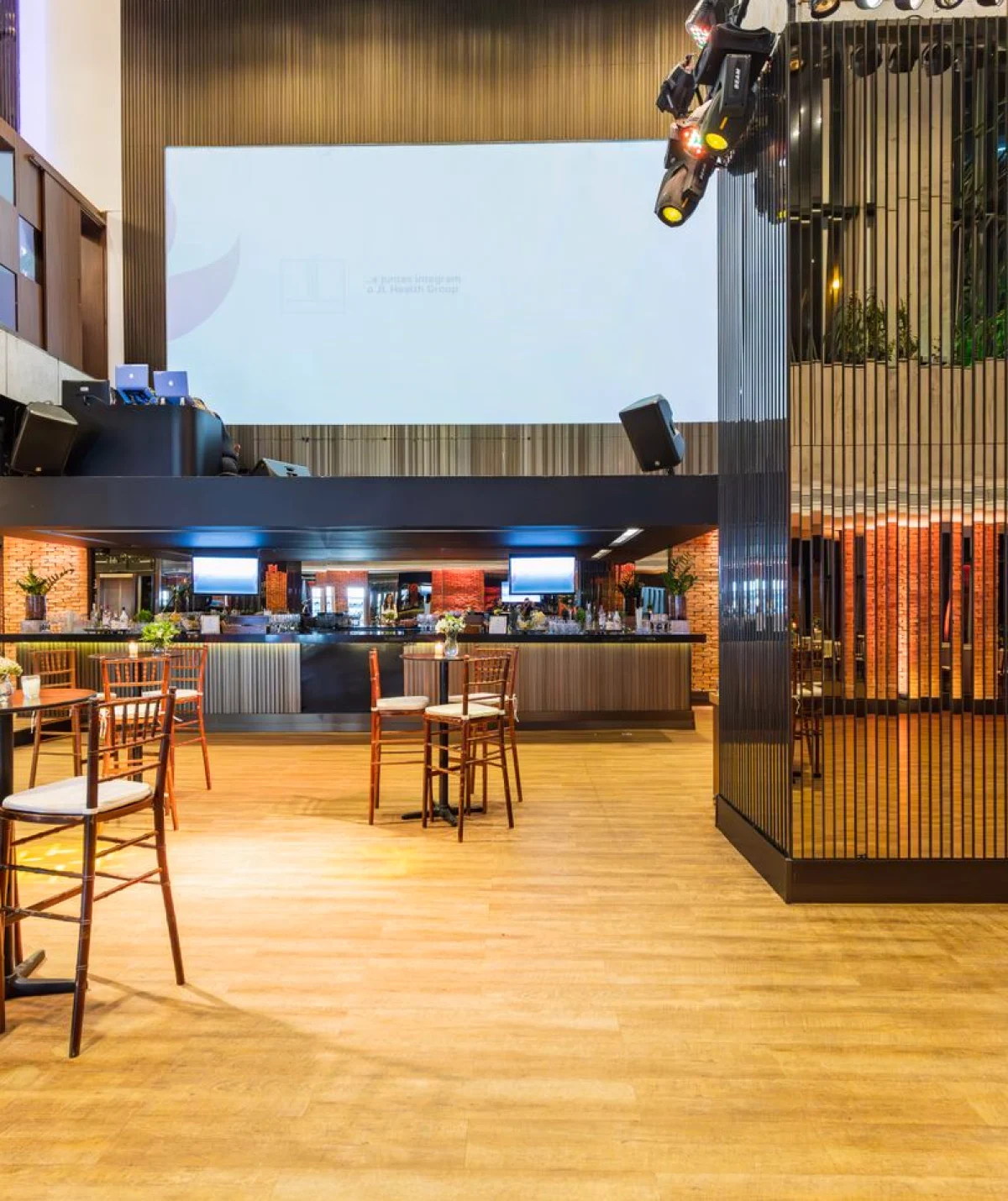
How much setup time does a launch really need?
This is the question that arrives first, and the honest answer is that it depends on what the room already has. In Module 6 we ask learners to work backwards from doors opening. Fix the moment the first guest walks in, subtract a rehearsal block, subtract camera and audio checks, subtract rigging, and only then see how early the crew must arrive. Most beginners start from the arrival time and hope everything fits, which is how a premiere ends up with a presenter rehearsing while the audience queues outside.
A small product presentation in a room with fixed lighting and a house screen can be prepared in a few hours. A creative premiere with a built stage, several cameras and a live stream needs a longer window, and often a day before. The venue preparation guide gives a worksheet where you list every task, who does it and how long it takes, then add a buffer for the things nobody predicted.
- Work backwards from doors opening, not forwards from arrival
- Add a rehearsal block and a technical check before any guests
- Keep a buffer for late deliveries and unplanned fixes
What should we ask the venue before we visit?
A site visit is only useful if you arrive with questions. The guide in Module 6 lists them in the order a producer would need the answers: access times, loading route, number and location of power points, ceiling height, house rules on rigging, and who on the venue side holds the keys. Learners practise sending this as a short written checklist a few days before the visit, so the venue contact can gather answers instead of improvising them on the day.
Photographs help more than most people expect. Ask for pictures of the loading door, the route to the stage and any stairs or lifts on the way. A lift that fits a person but not a flight case is the kind of detail that costs an hour on the day. When the venue cannot answer something, write it down as an open item and assign someone to close it before load-in.
- Access hours, loading route and parking for vehicles
- Power points, their circuits and who can switch them
- Rules on rigging, tape, fixings and noise
Where does the power come from, and is it enough?
Power is the question that sounds technical and is mostly about conversation. Rooms are wired in circuits, and several sockets can share one. Plug in lighting, a projector, a streaming desk and a coffee machine on the same line and something will trip at the worst moment. In practice we ask learners to map every device, estimate what each draws from its rating label, and group them so that critical equipment, such as the stream and audio, sits on separate supply from lighting and catering.
Where the venue is unsure about its circuits, ask for the person who knows the building, not a general answer. For anything beyond ordinary sockets, a qualified electrician should confirm the supply, and the course teaches you to recognise when to ask rather than to improvise. A simple plan on one page showing sockets, devices and extension routes is something the whole crew can read at a glance.
- List every device and its rated draw before arriving
- Keep stream and audio on a supply apart from lighting
- Bring a one-page power plan for the whole crew
How do we keep cable runs safe for people and equipment?
Cables are the most common hazard in a launch room, and the fixes are unglamorous. Route them along walls and behind staging where you can, keep power and signal cables apart to avoid interference, and cross walkways only where there is no alternative. Where a crossing is unavoidable, use proper ramps rather than tape alone, and mark the edges so guests in dim light can see them. Module 6 has learners walk the room as an audience member would, checking every path.
Length matters too. A cable that is slightly short is a problem on the day, and one that is far too long becomes a loop to trip over. Measure the route on the visit, add a margin, and label both ends of every run so that striking the event at night is quick. Coil spare length neatly and out of the way, never tightly wound while carrying load.
- Run cables along walls and behind staging where possible
- Use ramps over walkways and mark their edges
- Label both ends of every run for a quick strike
What belongs on a venue preparation plan?
Learners finish the module by writing a single plan that others can follow without them in the room. It opens with contact names and the access schedule, then lists the loading route, the power plan, the stage and camera positions, the cable routes and the safety notes. Each item carries an owner and a time. The purpose is that anyone on the crew, including someone who joined that morning, can see what happens next without asking.
We also include a section for known risks and the fallback for each: what happens if the lift is out of service, if power is switched off at the wrong moment, or if the load-in window is shortened. Writing the fallback in advance takes minutes and changes how calmly the crew responds. The plan is shared with the venue contact beforehand, so surprises on either side surface early.
- Contacts, access times and the loading route
- Power plan, stage layout and cable routes
- Known risks with a fallback for each
What should you bring to your first venue visit?
Keep the kit modest. A tape measure, a notebook or tablet, a camera or phone for photographs, and a printed copy of your checklist cover most of it. A torch is useful for plant rooms and rigging points. Bring the draft run sheet too, because a venue contact will answer a question about stage position far more precisely when they can see the sequence of the evening.
Walk the route a guest takes from the entrance to their seat, then the route a presenter takes from the green room to the stage, then the route the crew takes with equipment. Three walks, three lists of problems. Most of what goes wrong on launch day was visible on one of them. Share your notes with the venue the same day while the details are fresh.
Venue preparation rarely makes the programme, yet it decides how calm the day feels. Ask the venue the right questions early, map your power, walk every route and write the plan so others can follow it. In Module 6 we practise exactly this until it becomes a habit. If you are planning a launch this season, start with a visit and a one-page checklist, and let the rest of the schedule grow from what you learn.
