What Presenter Rehearsals Cost and What Moves the Price
A plain look at what shapes the cost of presenter rehearsal sessions in the course: group size, script length, stage access and how many run-throughs each speaker gets.
6 min read
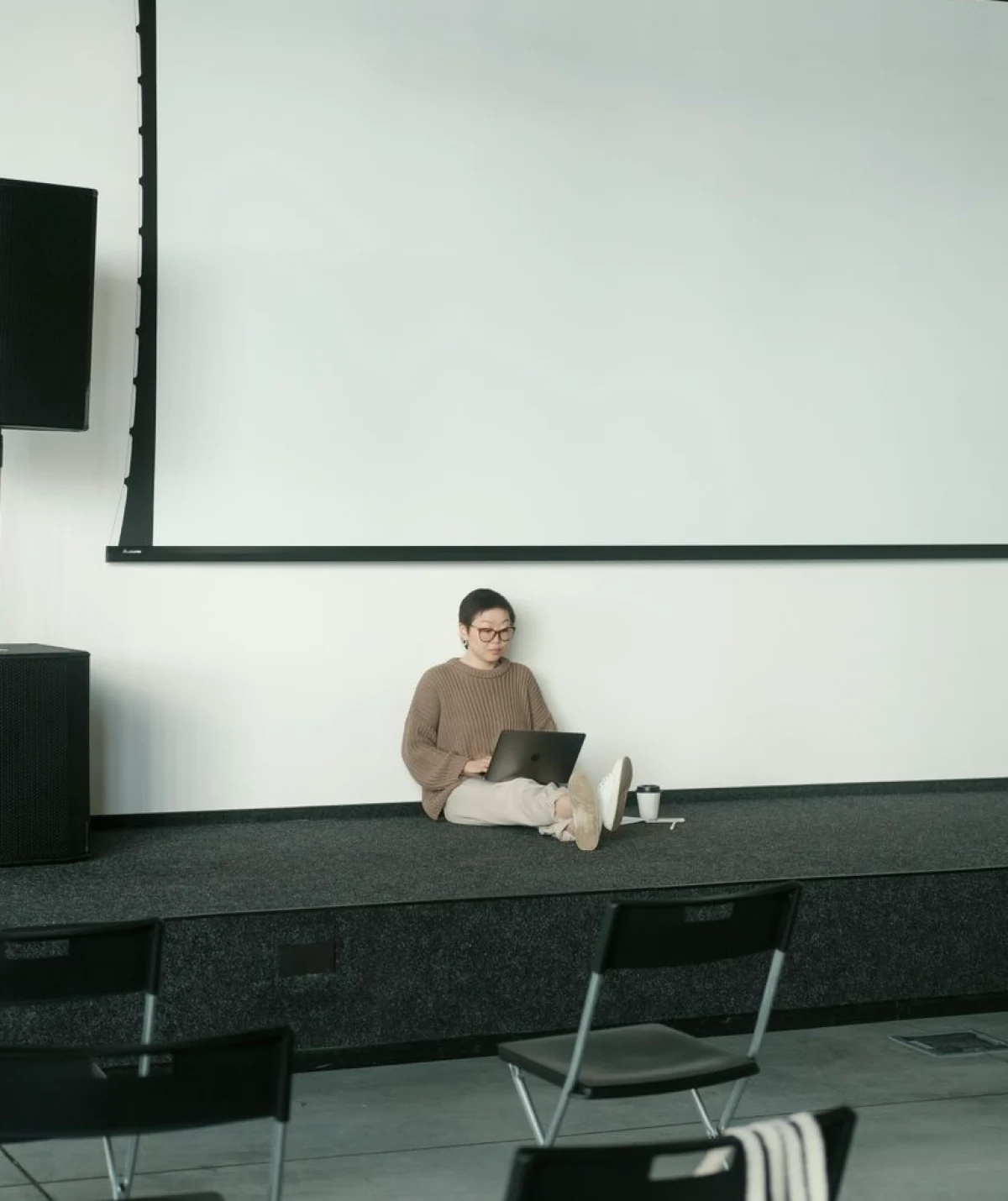
Why rehearsal cost is hard to quote in one number
People often ask what presenter rehearsals cost, and the honest first answer is that the number depends on how the work is arranged. In Module 3 we coach presenters through run-throughs, timing and stage positions using practice scripts. That sounds like one activity, yet a session for one nervous product lead looks very different from a session for four speakers sharing a twenty-minute reveal.
What you are really paying for is guided practice time with an instructor, access to a stage-like space and the preparation that sits behind the session. The hours on the floor are only the visible part. Reading scripts, marking stage positions and preparing feedback notes all happen before anyone steps into the light.
This article sets out the factors that move the price up or down, so you can judge a figure when you see one. It speaks only about how the rehearsal module is structured, not about any fixed rate, because the details of your own situation matter more than an average.
Group size and speaker count
The most direct driver is how many presenters are working in a session. One speaker gets the instructor's full attention, which means detailed notes on pacing, posture and where to stand when slides change. Add a second and third speaker and the same hour has to be shared, so either the session grows longer or each person gets a lighter pass.
Handovers between speakers are a separate piece of work. Who walks on, who hands over the clicker, where the first presenter exits and what happens if a slide runs long all need rehearsing. A panel of four has six or more handovers, and each one deserves its own run-through.
For that reason a larger group rarely costs the same per head as a single speaker. It usually costs less per person, but more in total, and the extra time is spent on the joins between people rather than on individual delivery.
- One speaker: full attention, deeper notes
- Two or three speakers: shared time, handovers to rehearse
- Larger panels: longer sessions, lower cost per person
Script length and how finished it is
A finished script is cheaper to rehearse than a rough outline. When the words are settled, we can spend the session on timing and delivery. When the script is still changing, part of the hour goes to cutting, reordering and re-reading, which is editing work rather than coaching.
Length matters too, but less than people expect. A tight five-minute reveal can take as many run-throughs as a fifteen-minute talk, because short pieces leave no room to hide a stumble. Every second is visible, and the presenter feels each pause.
Practice scripts in the course are written to a known length, so learners see how much rehearsal a given running time really needs. As a rule, plan for at least three full run-throughs of any piece before calling it ready, and more where slides, props or a live product demonstration are involved.
Stage access, props and technical cues
Rehearsing in a room with a table and chairs is cheap, and it is useful for early script work. Rehearsing on something that resembles the real stage costs more, since space has to be set aside and marked out. Positions learned on a taped floor transfer far better to launch day than positions imagined at a desk.
Props and demonstrations add their own load. A presenter holding a product while advancing slides needs a different rhythm from one standing empty-handed at a lectern. If a reveal depends on a cue from the desk, the rehearsal should include that cue, which ties the session to the work of Module 2.
Each of these extras lengthens the session or the setup around it. None is wasted, but it is worth deciding early which ones you truly need, so the budget goes toward what the audience will actually see.
- Taped floor marks for entrances and exits
- Real or stand-in products for demonstrations
- Slide advancer and cue timing included
Number of run-throughs and gap between them
Repetition is where improvement happens, and it is also where most of the hours go. A first run-through finds the problems. The second tests whether the fixes held. The third shows whether the presenter can deliver without thinking about the plan, which is the point of rehearsing at all.
The gap between sessions matters as much as the count. Two sessions a week apart usually beat two sessions back to back, because speakers have time to absorb notes and practise alone. Spreading the work over several days costs a little more in scheduling, yet it tends to need fewer total hours.
If your launch date is close, compressing everything into one long day is possible, but fatigue sets in and the later run-throughs are weaker than the early ones. Leave room in the calendar and the price often settles lower.
How to keep the cost sensible
Start with a settled script, a clear list of who is speaking and a realistic running time. Those three things remove most of the guesswork and let the sessions be planned tightly. Bring the actual slides and any product you intend to show, so positions and timing are learned with the real material.
Be honest about experience. A confident speaker who has presented many times needs less coaching than someone doing it for the first time, and saying so up front avoids paying for reassurance nobody needed. The reverse is equally true: a first-time speaker is better served by an extra session than a rushed one.
Finally, decide what success looks like before you begin. Hitting the allotted time, moving cleanly between positions and handing over without a gap are all measurable, and they give you a clear point at which rehearsal can stop.
- Settled script and slides before the first session
- Clear list of speakers and their running order
- Honest note on each presenter's experience
Presenter rehearsal costs follow a small set of causes: how many people speak, how finished the script is, what the stage and props demand, and how many run-throughs the piece needs. Understand those and any figure you are given becomes easier to judge. If you are planning a launch, bring the script, the speaker list and your date, and the module will show you how much practice each part really deserves.
