What Presenter Rehearsals Now Look Like in Module 3
A close look at how Module 3 is run: practice scripts, timed run-throughs and stage positions, and what learners leave the rehearsal room able to do with a nervous speaker.
5 min read
Why rehearsal gets its own module
Module 3 exists because most launch problems that the audience notices are problems of preparation rather than equipment. A speaker who has never stood on the real marks, never heard the walk-on cue and never seen the slides advance on a delay will look uncertain however good the product is. We set aside a full module for this work so that learners treat rehearsal as a production task with a start, an end and a result, not as a favour done for the presenter the evening before.
The module sits after cue planning on purpose. By the time learners reach the rehearsal room they already hold a run sheet, so the first thing they learn is how a presenter's section fits inside a larger show. A four-minute reveal is not four minutes of speaking; it includes the walk on, the pause for applause and the handover to the next cue.
Priya Raman writes this note as the instructor who sits in on the filming side of these sessions, and the camera view makes rehearsal gaps obvious very quickly.
How a practice script is used
Each learner receives a practice script written for a made-for-teaching product reveal, with marked beats for the opening line, a demonstration moment and a closing statement. The script is deliberately plain so that attention goes to delivery. Learners read it aloud first at a seated table, then standing, then on the stage area with the screen behind them. Each pass changes only one thing, which makes it easier to see what actually improves the delivery.
Jenna Kowalski, who leads presenter coaching, asks learners to annotate the script rather than rewrite it. Breath marks, slide change points and a small symbol for where the speaker looks all go in the margin. The goal is a document that a stage manager could follow without hearing the speaker, because that is how it will be used on a real launch day.
- Seated read for pace
- Standing read for posture
- Stage read with slides and cues
Timing and the problem of the long first run
Nearly every first run-through is longer than planned, and the module treats this as normal rather than as a fault. Learners use a stopwatch and record the time at each marked beat, then compare the first run with the second. The difference is usually a handful of seconds in each section, and it adds up to a number that decides whether the schedule holds.
The practical lesson is to cut words, not to speed up. A presenter who rushes loses clarity, and the audience feels it even if they cannot say why. Learners practise trimming a sentence, removing a repeated claim and letting a visual carry a point that the speaker had been explaining aloud. They also learn to leave a few seconds of slack before each handover.
Stage positions and the walk
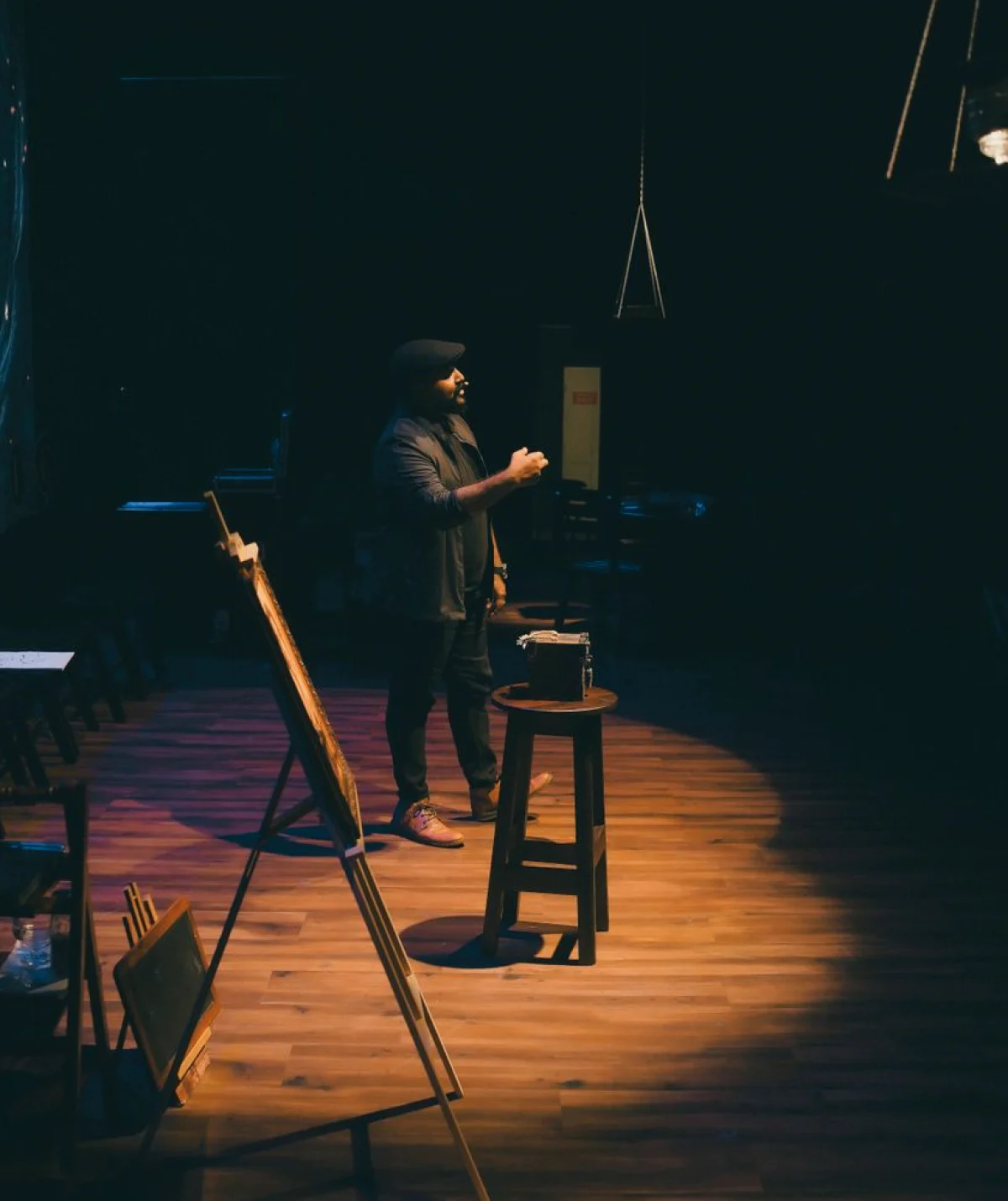
Standing in the right place is a skill that can be taught in an afternoon. Learners mark the stage with tape, define a home position, a demonstration position and an exit line, and then rehearse moving between them without looking down. The aim is a walk that reads as relaxed to the audience and predictable to the camera operator and lighting desk.
We ask learners to consider the other crew when they place a speaker. A demonstration table set too far upstage forces the camera to shoot over a shoulder; a mark set too close to the edge leaves the speaker half lit. Learners swap roles, so each one stands in the position they have just chosen and feels the consequences.
- Home mark and demonstration mark
- Walk-on and exit lines
- Sight lines to camera and screen
Coaching a nervous speaker
Learners take turns as coach and as presenter. The coach's task is to give one note at a time, in plain words, and to say what to keep as well as what to change. Jenna models this by stopping a run after a single observation and asking the presenter what they noticed before offering her own. It slows the room down in a useful way.
Nerves are handled with routine rather than reassurance. A fixed warm-up, a known first sentence and a clear point to look at before starting give a speaker something to hold. Learners leave the module with a short checklist of these habits that they can adapt for the people they will work with, whether those are colleagues, clients or a founder who rarely speaks in public.
What learners take away
By the end of Module 3 a learner can prepare a rehearsal plan, run a timed session, record the findings and give a speaker usable notes. They also hold a marked-up practice script and a stage plan, which feed directly into Module 4 where the same presenters are filmed from several angles.
This is practice, not a promise of a job. The module builds a habit of preparing people properly, and that habit is something producers can show to a client by the way a rehearsal is organised. Learners who finish the module tend to ask better questions at the briefing stage, because they now know how much a speaker needs before the doors open.
Module 3 is a plain, practical part of the curriculum: scripts, stopwatches, tape on the floor and honest notes. Learners who work through it come away with a method for preparing any speaker, a clearer sense of how their section fits into the whole show and a set of documents they can reuse. If you are weighing the course, this is the module where the work of a launch starts to feel like a team activity.
